
How to Prepare for a Layoff: Build Your Response Before You Need It
You don’t have to know what’s coming to prepare for it.
U.S. tech companies have announced more than 165,000 job cuts so far this year, up 54% from the same point in 2025. Behind each of those numbers is a person who started the week with a plan and ended it facing a future they hadn’t expected.
For anyone reading the headlines and wondering whether their company might be next, this creates a particular kind of uncertainty. The waiting leaves room for questions that are difficult to answer, especially when so much of what happens next is outside your control.
Most advice about preparing for a layoff focuses on the logistics: from updating your resume and reviewing your budget to quietly reconnecting with recruiters. Those steps matter, but there is another part of preparation that deserves just as much attention: understanding how you want to respond when the plans you have made for your life change without your choosing.
Practice before pressure
It is natural to put off thinking about how you might respond to a major change until it becomes unavoidable, but that is often the most difficult time to make thoughtful decisions. Pressure, fear, and urgency can all influence your judgment, making it harder to see your options clearly or decide what matters most.
A better time to do that work is before you need it, while the stakes are lower and you have room to reflect.
This is the philosophy behind The Climb, a guided journal by Chuck Hutchison, who knows what it feels like to have one chapter of life end without a clear picture of what comes next. After seven seasons in the NFL, his football career was over, leaving him to figure out how to support his family and build a future beyond the game. As he writes in The Climb, “I had no idea what to do next. Yet once again I had to do something, and fast. After all, I had a family to support.”
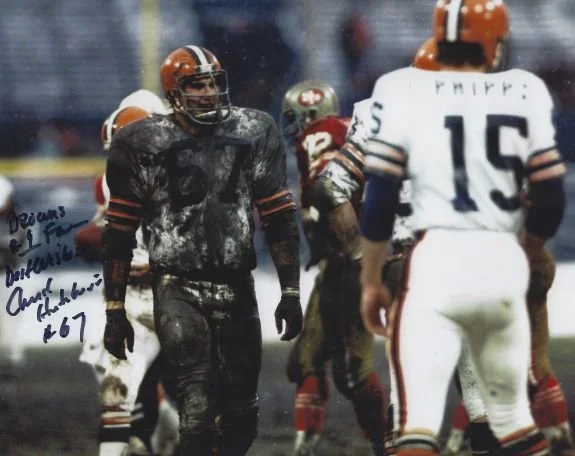
Chuck eventually took a job at a battery manufacturing company, beginning a new chapter in an industry far removed from professional football. He did not have a master plan for this transition, but he had spent years developing a way of responding to challenges that he could carry into unfamiliar circumstances.
He calls this approach practice before pressure. Rather than waiting for a crisis to decide what matters and how to act, the idea is to establish a personal standard ahead of time, building the awareness and habits that make it easier to respond in a way you can depend on when circumstances change.
If you suspect a layoff might be coming, you can begin putting that approach into practice now.
Responsibility: Separate what’s yours from what isn’t
The possibility of a layoff can bring a flood of concerns about things you cannot control, including executive decisions, the timing of announcements, severance arrangements, and the state of the job market. When so much feels uncertain, it is easy to spend your energy trying to anticipate what leadership might do next, even when those decisions are beyond your influence.
Responsibility does not mean finding a way to prevent a corporate restructuring or assuming you can work hard enough to guarantee your position. It means recognizing which actions belong to you and choosing where to direct your attention and effort.
An exercise from The Climb can help you distinguish between the two. Draw a large circle and place a smaller circle inside it. In the outer circle, write down everything about the potential layoff that sits outside your control. In the inner circle, identify the steps you can take for yourself, regardless of what happens next.
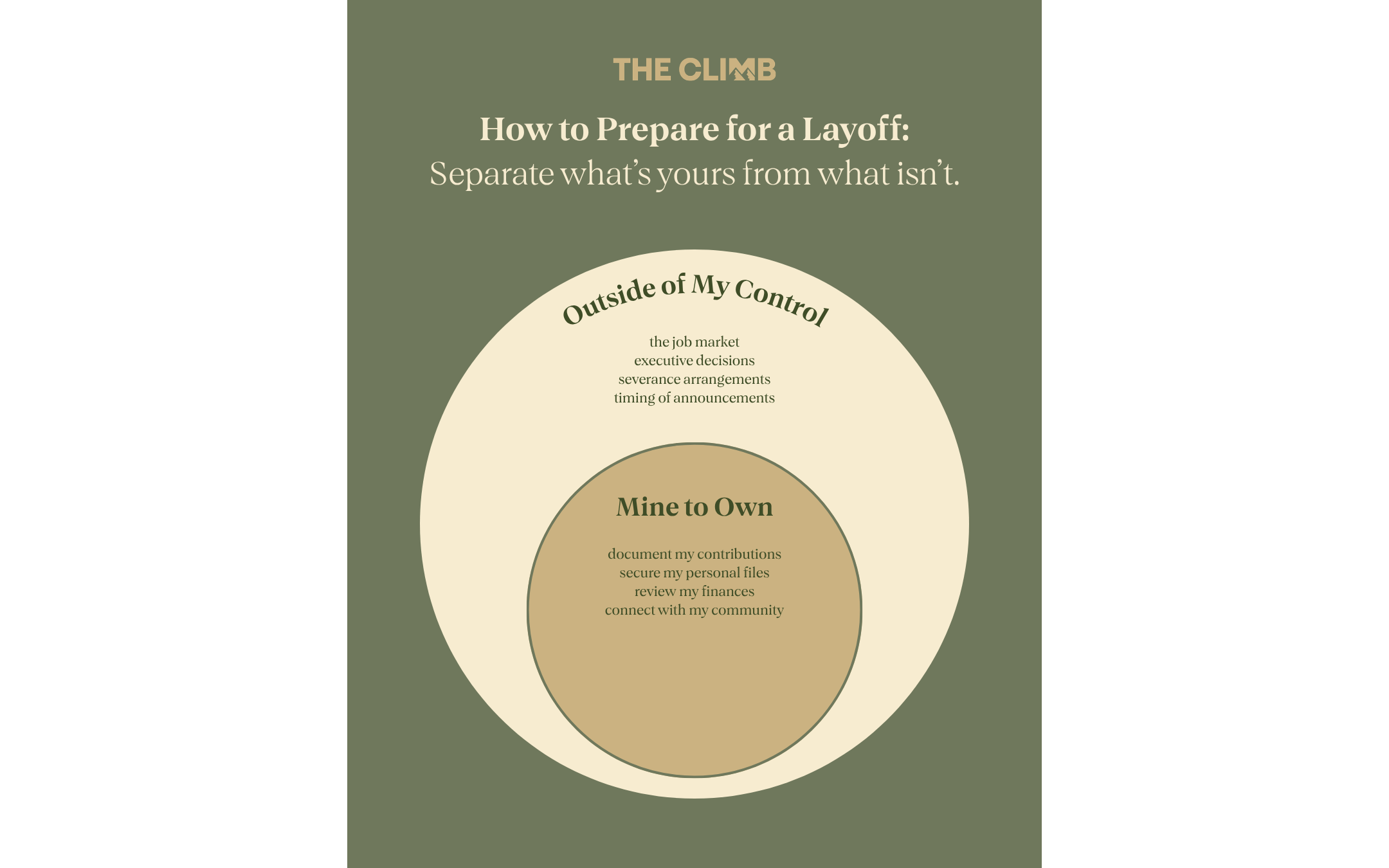
Those steps might include:
Documenting your contributions: Record the measurable results you have produced over the past year while you still have access to the relevant data, along with accomplishments and examples of your work that may be useful in future interviews.
Securing personal files: Back up personal contacts, copies of performance reviews, and portfolio materials you are permitted to keep on a personal device, taking care not to transfer confidential company information.
Reviewing your finances: Get a clear picture of your emergency savings, essential monthly expenses, and what a reduced budget might look like if your income changes.
None of these actions can guarantee that a layoff will not happen, but each one gives you something concrete to work with rather than leaving you to wait without a sense of direction. The goal is not to control the outcome, but to prepare yourself to meet it.
Community: Build it before you need it
Later in his business career, Chuck grew one of his company's largest accounts by bringing in people with knowledge and perspectives that complemented his own. As he reflects in The Climb, “Their strengths didn’t replace mine, they complimented them. They made my best better.”
That lesson is especially relevant during periods of professional uncertainty, when anxiety or competition can lead people to withdraw from the very relationships that could help them navigate a transition. Reaching out to others before you need their help creates opportunities to exchange ideas, gain perspective, and learn from experiences you might not have encountered on your own.
You might reconnect with a former colleague, arrange a conversation with a mentor, or ask a trusted peer to review your resume and offer an honest perspective on your experience. These conversations do not have to begin with a request for a job or a referral. They can simply be a way to maintain relationships and learn from people whose judgment you respect.
Building community does not mean handing responsibility for your future to someone else. It means recognizing that your own knowledge and abilities can go further when you make room for the knowledge and abilities of others.
Accountability: Learn from the role you’re in now
You do not have to wait for a layoff to take an honest look at your current role and consider what the experience is teaching you. This kind of reflection is not about assigning blame or deciding whether you have made the right career choices, but about understanding what you have learned and how that knowledge might inform your next decision.
Chuck refers to this process as “trial and learn,” an approach that treats experience as information rather than a verdict on your abilities. Instead of viewing every outcome as a measure of success or failure, you can examine what happened, consider what influenced the result, and decide what you want to do differently moving forward.
You might begin by asking yourself what you find meaningful about your current work, which responsibilities you have continued to tolerate despite knowing they are not a good fit, and what you would want to carry into your next role if you had to make a change. You may discover strengths you want to build on, working conditions that help you do your best work, or priorities that have become clearer with time.
Taking the opportunity to reflect while you are still in your current position means that, if a transition does come, you will have a better understanding of what you want from the next chapter rather than having to work through those questions under pressure.
Your weeks of waiting
Waiting for an uncertain outcome can be uncomfortable, particularly when your mind keeps returning to possibilities you cannot resolve. While there is no way to eliminate that uncertainty entirely, the time before a decision is made can still be useful if you give yourself room to consider what is within your control and how you want to approach what comes next.
Rather than trying to answer every question at once, set aside some time this week to reflect on a few questions:
What about this situation is outside my control, and what belongs to me?
What is one meaningful action I can take before Friday?
Who is one person I could reconnect with now, before I need anything from them?
If my plan changed tomorrow, how would I want to respond?
These questions are not intended to produce immediate answers or a perfect plan. Their purpose is to create enough distance from the uncertainty that you can consider your options thoughtfully and make decisions that reflect the person you want to be, rather than simply reacting to the pressure of the moment.
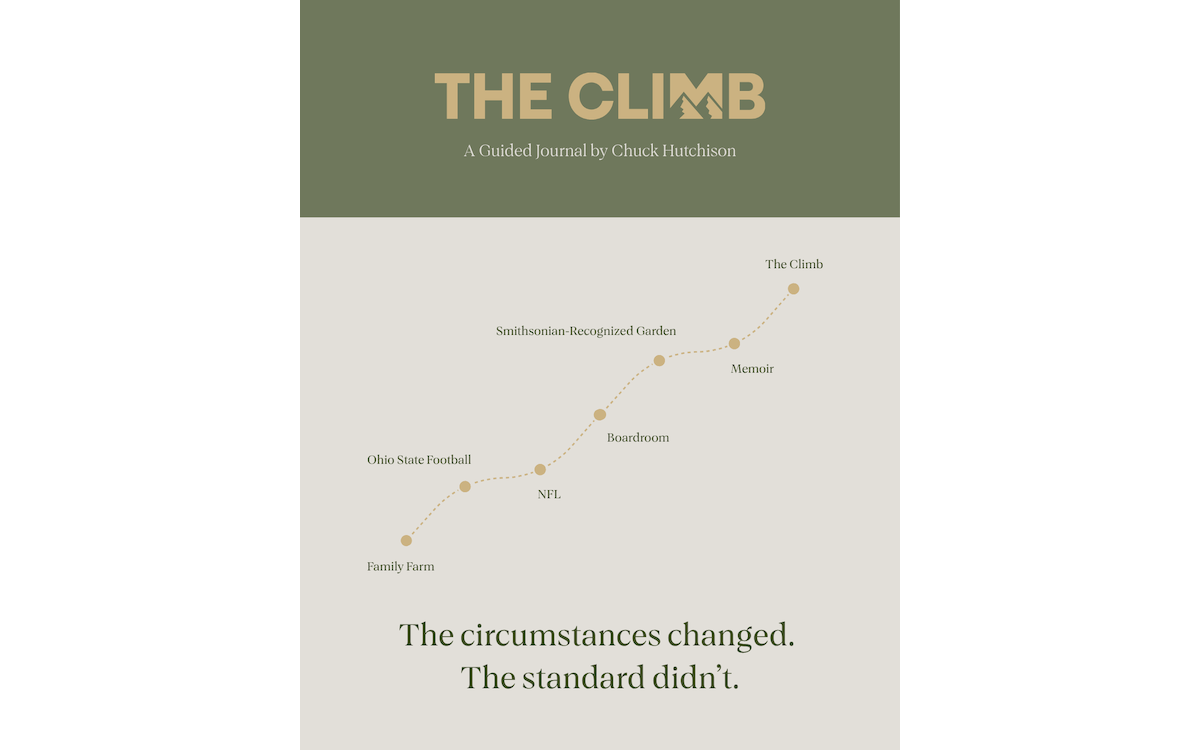
That is the thinking behind The Climb. Chuck created the workbook as a place to practice the behaviors that have shaped his response throughout his life, from the end of his football career to the challenges and opportunities he encountered in business and retirement. By making time for that reflection before a difficult moment arrives, you can begin building a response you can depend on when life takes an unexpected turn.
You don’t have to know what’s coming to prepare for it.
Join the waitlist to be the first to know when The Climb Journal is available.
